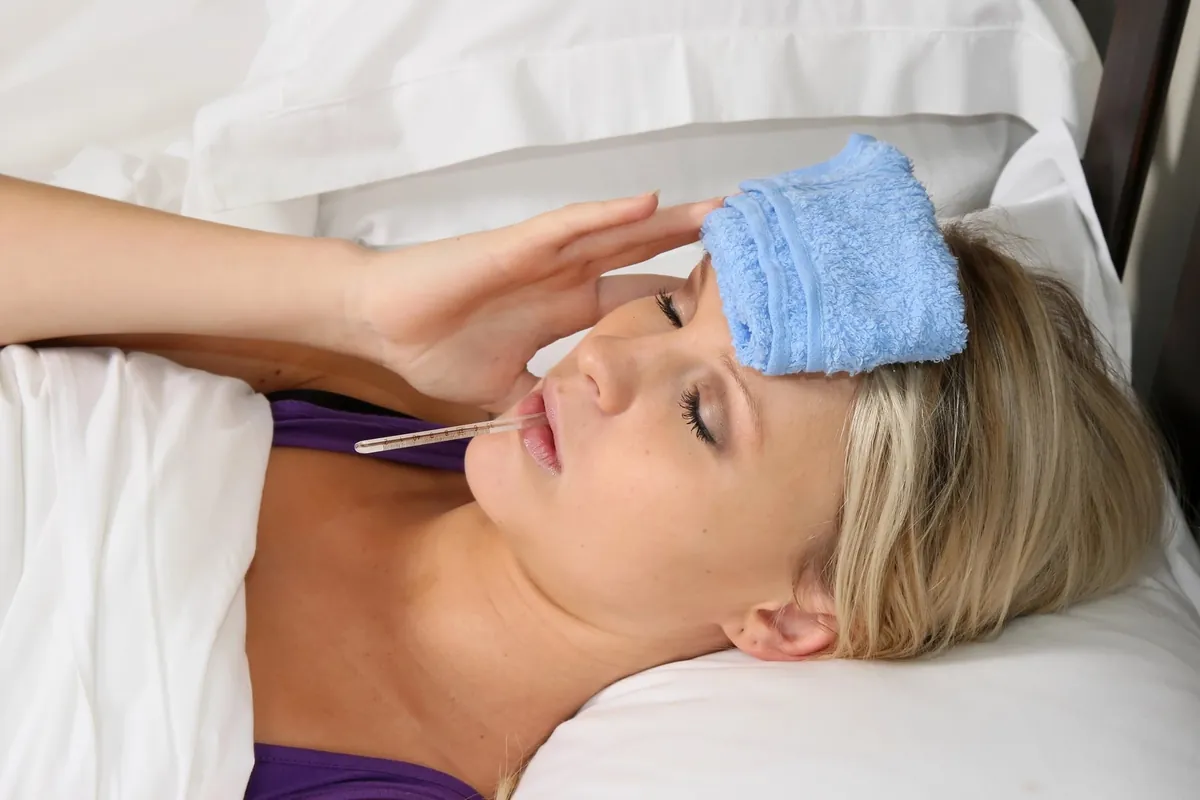
Home remedies for fever: hydration, elderflower and rest
A fever is not the illness. It is the body raising its own temperature to make itself a worse place for whatever has arrived, and French grandmothers understood that better than the century that followed them: their remedies are about getting through a fever comfortably, not about abolishing it.
Where the temperature sits: MedlinePlus describes normal as “usually around 98.6 °F (37 °C)” and varying from person to person. A fever is generally counted from 100.4°F (38°C) taken rectally, or 99.5°F (37.5°C) by mouth.
Read the last section first if you are dealing with a child. The age thresholds there are the part that matters, and no infusion changes them.
Hydration, and it comes before everything
A fever makes you sweat, and sweating dries you out, which makes the fatigue worse and the recovery slower.
Drink about 2 quarts (2 liters) a day for an adult, alternating room-temperature water, lukewarm herbal teas and warm vegetable broths. In small sips every 15 to 30 minutes, without waiting to feel thirsty: thirst is already the beginning of dehydration.
Avoid ice-cold drinks, which bring on chills. Lukewarm or room temperature.
The signs of dehydration to watch for in an adult: intense thirst, dark and scanty urine, dry mouth, sunken eyes, extreme fatigue, dizziness, headache.
In a baby, and these are different: a sunken fontanelle, crying without tears, a dry diaper for more than 6 hours, listlessness. Any of those means seeking care now, not after the next feed.
For infants and young children, use pharmacy oral rehydration solution, dosed as directed, rather than anything improvised. A pinch of salt and a spoon of honey in a quart of water is a pleasant drink for an adult, and it is not a rehydration solution. And never honey under 1 year, in this or anything else.
Do not bundle up
This is the mistake almost every household makes, and grandmothers made it too, which is why it is worth writing plainly.
Piling on blankets and sweaters to “sweat out the fever” is counterproductive. You stop the body from shedding heat, so you hold the temperature up and feel considerably worse.
Instead: light cotton clothing, a thin sheet or a single light blanket only if you feel cold, and a cool room, 64 to 68°F (18 to 20°C), aired regularly. The body needs to lose heat through the skin and into the air around it. Let it.
The same instruction applies through a bout of flu, where the chills make the temptation to bundle up strongest.
Strict rest
Every extra degree raises your metabolism and your energy needs. Rest is not a suggestion here, it is where the work happens: the main immune responses run during deep sleep.
Avoid all physical activity, even light. Set yourself up with pillows in a cool, well-aired room without drafts, and keep water, tissues, a thermometer and a phone within reach so you are not getting up for them.
Elderflower infusion
Pour 1 cup (250 ml) of just-simmering water, at most 185°F (85°C), over 2 teaspoons (3 to 4 g) of dried black elderflowers. Cover with a saucer, steep 10 minutes, strain, and drink it hot under a light blanket. Three cups a day maximum, for 3 to 5 days. Honey and half a lemon improve it.
Elderflower is the classic French plant for a feverish, shivery state, taken to encourage a gentle sweat.
And the safety line is genuine poisoning. NCCIH: “raw or unripe elderberries and other parts of the elder tree, such as the leaves and stem, contain poisonous cyanide-producing substances that can cause nausea, vomiting, and severe diarrhea; cooking eliminates this toxin.” Dried flowers from a herbal supplier, or fully cooked berries. Nothing picked and used raw.
NCCIH also notes that little is known about elderberry during pregnancy or breastfeeding, and that you should talk to your provider before using it alongside any medicine.
Linden infusion
Linden flowers are the other half of the French pair, taken for the same gentle sweat and for the calm. Steep a heaped teaspoon of dried linden flowers in a cup of just-simmering water for 10 minutes, covered, and drink it warm in the evening.
On what we can source: NCCIH has no linden page. This is a tradition, handed on as one, and its real merit on a feverish evening may simply be that it is warm, mild and gets fluid into someone who does not feel like drinking.
Chicken broth
Not a metaphor, and not only American.
In a large pot put a chicken carcass or a whole chicken in pieces, 2 roughly cut carrots, 2 onions with their skins on, 2 celery stalks, 4 crushed garlic cloves, a bunch of parsley, fresh thyme, a bay leaf, salt and pepper. Cover generously with cold water, about 3 quarts (3 liters). Bring to a boil, drop to the lowest heat, and simmer covered for 2 to 3 hours, skimming at the start. Strain through a fine sieve. Two or three bowls a day, hot.
Keeps 3 days in the refrigerator, or freezes in portions.
Why it earns its place is not mysterious: it is warm fluid with salt in it, it is easy to swallow when nothing else appeals, and it counts toward the hydration at the top of this page. Add vermicelli or rice and it becomes the first meal someone will accept.
When to call the doctor
This is the section that matters, and for a child it overrides everything above.
A baby younger than 3 months (12 weeks) with a temperature of 100.4°F (38.0°C) or higher: call the pediatrician immediately. No remedy first, no waiting to see.
Call as well, for a child, if:
- the fever lasts more than 24 hours in a child younger than 2;
- it lasts more than 3 days (72 hours) in a child of 2 or older;
- the temperature rises above 104°F (40°C) repeatedly, at any age;
- the child looks very ill, is unusually drowsy, or is very fussy;
- there is a stiff neck, severe headache, severe sore throat or severe ear pain;
- there is breathing difficulty, an unexplained rash, or repeated vomiting or diarrhea;
- the child has a history of seizures, immune system problems or heart conditions;
- the child still acts sick once the fever has come down, or seems to be getting worse.
That list is the American Academy of Pediatrics, quoted closely because it is not a list to paraphrase.
For an adult, call for a fever that lasts more than three days, one that comes back after settling, or one accompanied by a stiff neck, confusion, breathing difficulty, chest pain, a rash, or an inability to keep fluids down.
A fever with vomiting and diarrhea is a stomach bug rather than an ordinary fever, and there the fluids matter more than the temperature: our stomach flu remedies set out the rehydration rules, and the thresholds for a baby are lower again.
Never aspirin for a child or a teenager with a fever. MedlinePlus is unambiguous: “Adults can also take aspirin, but children with fevers should not take aspirin.” Reye syndrome is the reason, and it applies through the teenage years.
A fever with a sore throat but no cough and no runny nose is the pattern that makes a doctor think about strep, and that distinction is set out in full in our sore throat remedies. A fever that arrived suddenly with body aches is more likely the flu, and if it crept up with a runny nose it is probably just a cold.
FAQ
Should I try to bring a fever down at all?
Comfort is the goal, not a number. If someone is drinking, resting and reasonably comfortable, a moderate fever is doing its job. MedlinePlus notes that for a very high fever a provider may recommend acetaminophen or ibuprofen. The age thresholds above are what decide whether you call, not how high the number looks.
Is a lukewarm bath a good idea?
Lukewarm, never cold, and never with rubbing alcohol in the water. Cold water and alcohol both cause shivering, which raises the temperature back up and makes a miserable person more miserable. Cool room, light clothes and fluids do the same job without the shock.
Why did grandmothers wrap people up if it is the wrong thing?
Because the chills that come with a fever feel exactly like being cold, and the instinct is to warm someone who is shivering. It is a humane mistake rather than a foolish one. One light blanket while the chill passes is fine; three blankets and a closed room are not.

Virginie Verglas
Virginie is a French journalist and author. She founded Grands-Mères.net in 2012, and her book "The French Book of Natural Remedies" is the American edition of her work on traditional remedies.