Bad breath home remedies: the one step almost nobody takes
It is the complaint people research at midnight and never mention to anyone. Which is a shame, because in most cases it comes down to two things nobody does, and neither of them is expensive.
The step almost nobody takes: clean your tongue
Most of the smell is produced at the back of the tongue, in the coating that builds up there. Brushing your teeth does not reach it, and no mouthwash rinses it away.
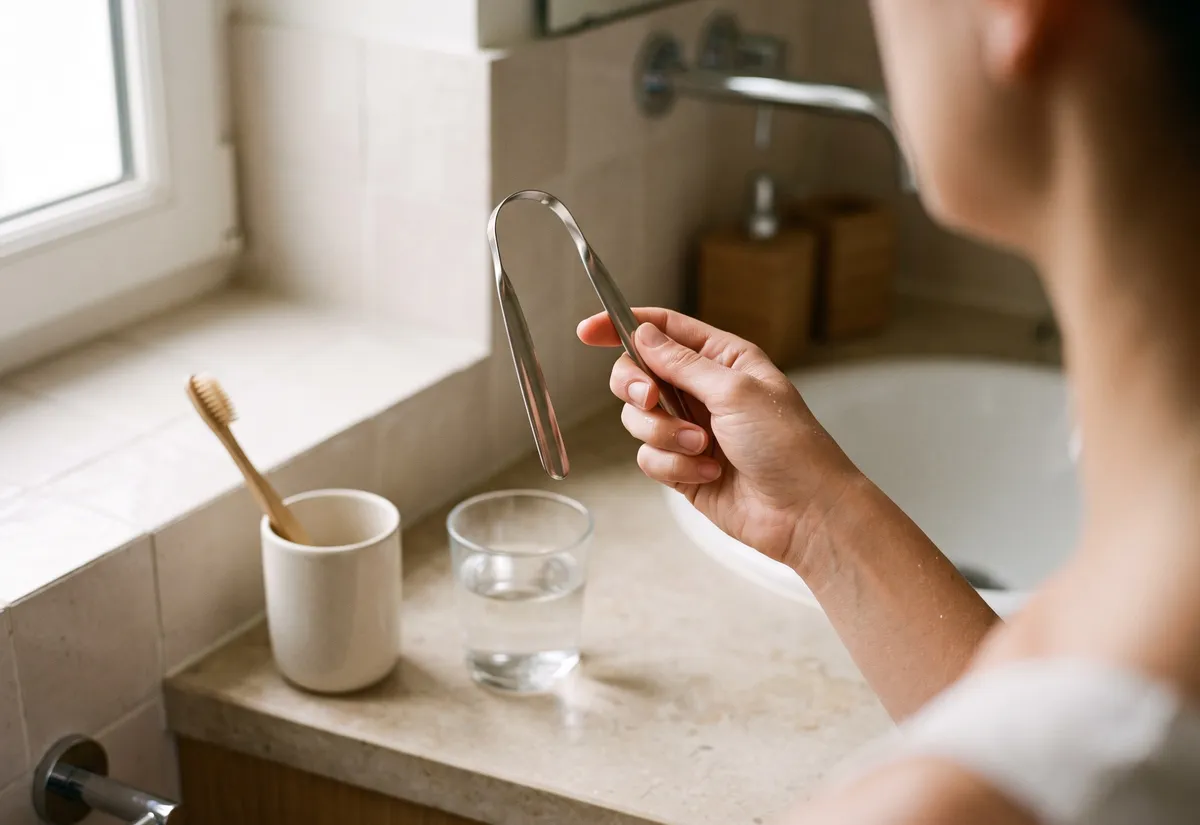
Every morning, with a tongue scraper or the back of a toothbrush: scrape from as far back as you can comfortably go, forward, four or five times, rinsing the scraper between passes. It takes twenty seconds.
Go far enough back to be slightly uncomfortable, not far enough to gag. Most people who try this notice the difference the same day, and it is the single most useful thing on this page.
The second: keep the mouth wet
A dry mouth smells, and it is why breath is worst on waking. Saliva flow drops overnight, and bacteria have an easy night.
- Drink water through the day, not in one go.
- Chew sugar-free gum after a meal if you cannot brush. It works by making saliva, not by masking.
- Breathe through your nose. Mouth breathing dries everything, and it is worth asking a doctor about if your nose is blocked most of the time.
- Watch the alcohol and the coffee, both of which dry the mouth.
Several common medications cause a dry mouth as a side effect. If yours started when a prescription did, that is worth mentioning to a pharmacist rather than treating at home.
The basics, which still matter
- Brush twice a day, two minutes, and reach the gum line.
- Floss or use interdental brushes once a day. What rots between the teeth is a large part of the problem, and a toothbrush never goes there.
- Clean your dentures properly if you wear them, out of the mouth, every day.
- Change your toothbrush every three months.
- Treat what hurts. A toothache you are avoiding is a spot you are not brushing properly.
The French remedies, and what they are worth
These are pleasant, they are traditional, and they are all short-term. None of them replaces the tongue and the water.
Fresh parsley, chewed slowly after a meal. The old standby, and the chewing itself gets saliva going.
A clove, held in the mouth or chewed briefly. Strong, warming, and traditional across French households. Not for children, and clove oil in particular is not something to put in a child’s mouth.
Mint or fennel infusion, after a meal. A teaspoon in a cup of hot water, ten minutes.
A cardamom pod or a coffee bean, chewed, both traditional across the Mediterranean.
Lemon, and how not to use it
Lemon appears in every list of remedies for this, and it comes with a real caution.
Never neat, never rubbed on the teeth, never held in the mouth. Lemon juice is acidic enough to erode enamel, and enamel does not grow back. A dentist can tell within seconds who has been sucking lemons.
If you want it: the juice of half a lemon in a large glass of water, drunk normally, then rinse with plain water afterwards. And not several times a day.
The mistakes that keep it going
- Reaching for mints. They cover for ten minutes and the sugar feeds the problem.
- Using a strong alcohol mouthwash daily. It dries the mouth, which is the cause, and it can make things worse in the long run.
- Brushing harder instead of longer. Hard brushing damages gums, and receding gums make more places for bacteria.
- Ignoring bleeding gums. Gums that bleed when you brush are inflamed, and inflamed gums are one of the commonest causes of persistent bad breath. That is a dentist, not a remedy.
When it is not a hygiene problem
This is the part worth saying plainly. If your hygiene is genuinely good and the smell persists, stop treating it as hygiene.
Make a dental appointment if:
- your gums bleed when you brush, are red, swollen or receding
- you have a tooth that hurts, or one you know needs attention
- the smell persists despite tongue cleaning, flossing and plenty of water
- you have a bad taste in the mouth that will not shift
And see a doctor if:
- your mouth is persistently dry, particularly since starting a medication
- you have a blocked nose, sinus trouble or post-nasal drip most of the time, in which case what helps sinusitis is the more useful page
- you have heartburn or reflux, which can reach the mouth: see heartburn
- the smell is unusual, sweet or fruity, or it appeared suddenly with other symptoms
Persistent bad breath is a symptom, not a failing. Gum disease is the most common cause after the tongue, and it is treatable.
FAQ
Why is my breath worst in the morning?
Saliva flow drops during sleep, so the mouth dries and bacteria have several undisturbed hours. It is normal, and it clears with brushing, tongue cleaning and a glass of water.
Can I test my own breath?
Not by cupping your hands, which tells you nothing. Lick the inside of your wrist, let it dry for ten seconds, and smell it. Or ask someone you trust, which is more accurate and much harder.
Does mouthwash fix bad breath?
It covers it. An alcohol-based one also dries the mouth, which is the underlying cause for many people. Cleaning the tongue and drinking water do far more.

Virginie Verglas
Virginie is a French journalist and author. She founded Grands-Mères.net in 2012, and her book "The French Book of Natural Remedies" is the American edition of her work on traditional remedies.