Head lice home remedies: the wet comb, and why it beats everything else
The note comes home from school, and the evening is gone. Lice are harmless, they carry no disease, and they still manage to feel like a small disaster.
French families dealt with them the same way for generations, and the method has held up remarkably well: oil, a fine comb, and the patience to do it again three days later.
First, is it actually lice?
An itchy head is not proof. Half the people with lice do not itch at first, and plenty of itchy heads have nothing.
Look in daylight or under a bright lamp, on damp hair, behind the ears and at the nape of the neck. You are looking for a live insect the size of a sesame seed, moving.
Nits are the eggs, glued to the hair shaft. A nit more than a quarter inch from the scalp is an old empty shell and proves nothing except that there was an infestation once. Only a live louse, or a nit close to the scalp, means treat now.
The olive oil lotion
The traditional French approach, and it is sound.
Coat the hair generously with plain olive oil, root to tip, cover with a towel or a cap, and leave for at least two hours. The oil suffocates the live lice and makes the hair slippery enough to comb.
Then comb, then wash out with ordinary shampoo, twice if needed.
It does not kill the eggs. That is why the next section exists, and why one session never finishes the job.
The wet combing, which is the actual treatment
This is the part that clears an infestation, and there is no shortcut.
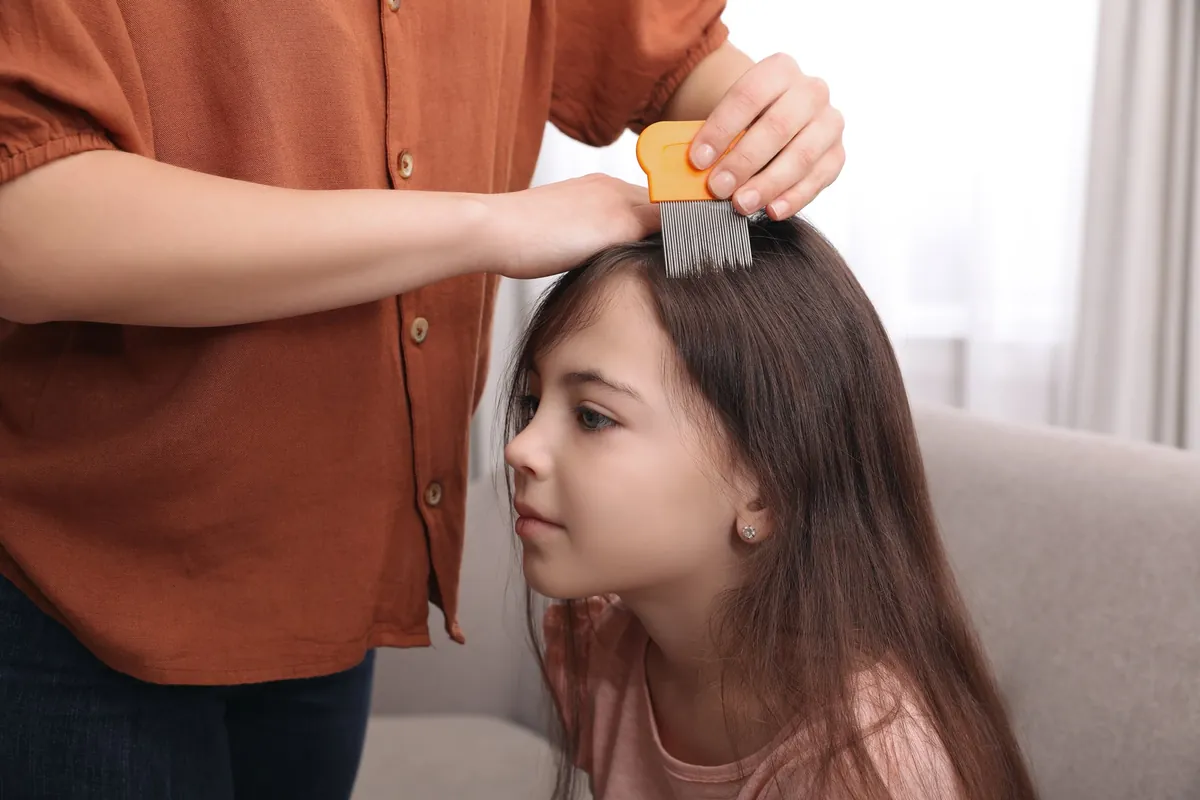
- Wash the hair and leave it soaking wet, with plenty of conditioner. Wet lice cannot move, and conditioner makes the comb glide.
- Use a proper fine-toothed lice comb, metal for preference. An ordinary comb does nothing.
- Section the hair and comb each section from the scalp outward, every time.
- Wipe the comb on a white paper towel after each stroke and look at what comes off.
- Twenty to thirty minutes for a full head. It is long, and there is no way around that.
Repeat on days 1, 4, 8, 12 and 16. The eggs that survive hatch within about a week, and this schedule catches each new generation before it can lay. Missing a session is how a family stays infested for a month.
Dimethicone, when nothing gives
If two full weeks of combing have not cleared it, a pharmacy lotion based on dimethicone is the reasonable next step.
It is a silicone that coats and suffocates rather than poisons, which is why lice do not develop resistance to it the way they have to older insecticides. It is sold without prescription and it is well tolerated.
Ask the pharmacist, follow the timing on the box, and keep combing alongside it.
And the essential oils?
Lavender and tea tree appear in every traditional lice recipe, and they deserve caution rather than enthusiasm.
Not on a young child’s scalp. These are concentrated products applied to skin, close to the eyes, on someone small. NCCIH notes that essential oils can be poisonous if swallowed and that some should not go near a small child’s face at all.
The evidence that they clear lice is thin. The combing is what clears lice.
The things that must never be used
These circulate every single time, and they injure people every single time.
- Kerosene, gasoline, lighter fluid. They are flammable, they burn skin, and children have been seriously hurt. Never.
- Products meant for animals. A flea treatment for a dog is not a treatment for a child’s head, and the same logic that makes dog flea products dangerous for cats applies far more strongly here.
- Anything meant for another problem. A treatment for athlete’s foot is not a treatment for a scalp, and the reverse is equally true.
- Mayonnaise and petroleum jelly left overnight. Messy, hard to wash out, and no better than olive oil.
- A hair dryer on hot to kill them. Scalp burns, and it does not work.
Treat the heads, not the house
A louse off a scalp dies within a day or two. Stripping the house is wasted effort.
What is worth doing: wash the pillowcases and the recently worn hats at 130 degrees Fahrenheit, soak the combs in hot water for ten minutes, and check everyone in the household on the same evening. Treat only those who actually have live lice.
The scratching itself can keep a child awake for nights on end, and what helps a broken night applies to a parent as much as to a child.
Tell the school. Everyone finds it embarrassing and nobody should: lice are about clean hair as often as anything else, and silence is what keeps them circulating.
When to see a doctor
Make an appointment if:
- the scalp is scabbed, weeping, or the neck glands are swollen, which suggests infection from scratching
- nothing has changed after two weeks of proper combing plus a pharmacy lotion
- the child is under two years old, before using any product at all
- you are pregnant or breastfeeding and considering a treatment
FAQ
How long does it take to get rid of head lice?
Two to three weeks of combing every three days. There is no method that ends it in one evening, and any product claiming otherwise is overselling.
Do lice prefer dirty hair?
No, and this myth causes real shame for no reason. Lice cling to clean hair as readily as to dirty hair, and they spread by head-to-head contact.
Do I need to treat the whole family?
Check everyone the same evening, treat only those with live lice. Treating a head that has none is pointless and, with medicated products, not harmless.

Virginie Verglas
Virginie is a French journalist and author. She founded Grands-Mères.net in 2012, and her book "The French Book of Natural Remedies" is the American edition of her work on traditional remedies.