Muscle cramp home remedies: stretch first, then the warm compress
A cramp is short and completely absorbing. The muscle locks, usually the calf, usually at night, and for thirty seconds nothing else exists.
French grandmothers had a clear order for it, and it starts with what you do while it is happening rather than what you take afterwards: stretch, then warm, then drink.
While it is happening: stretch, do not massage
Rubbing a contracted muscle is the instinct, and it is the wrong one. A cramping muscle is already shortened as hard as it can go, and what ends it is length.
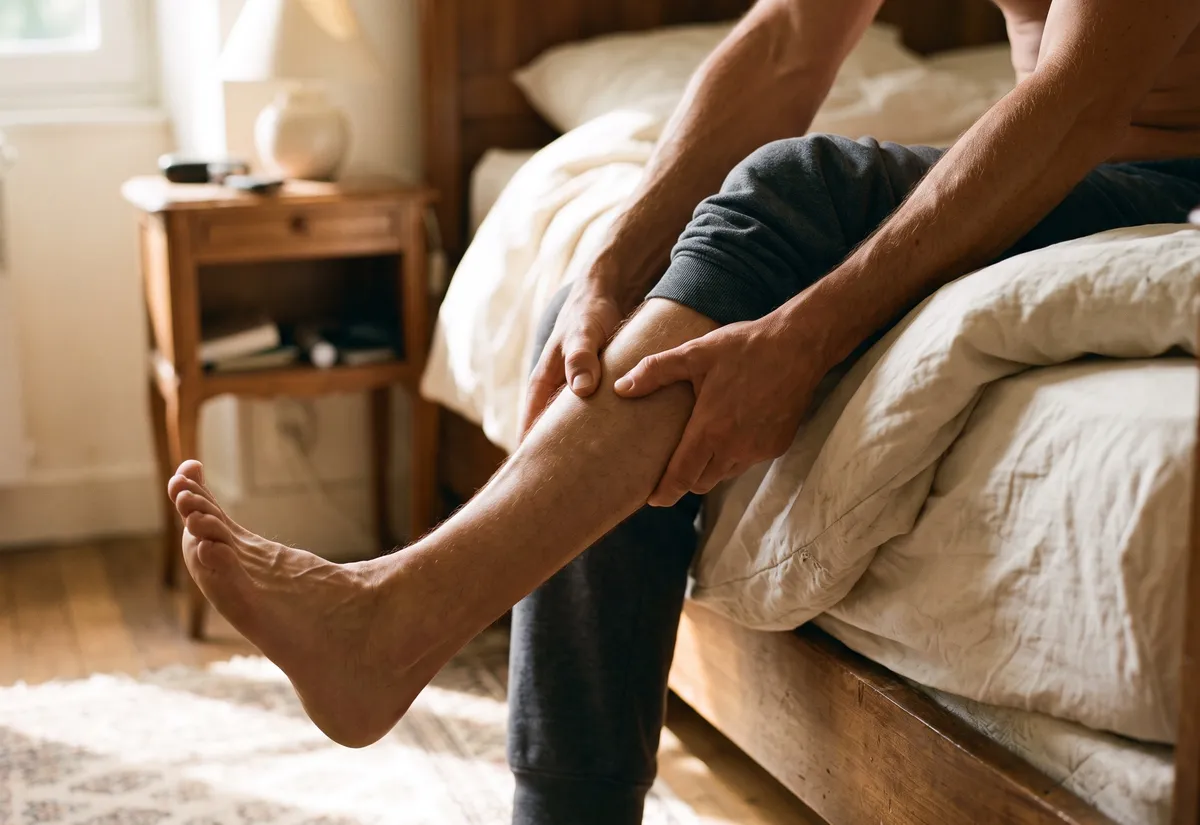
- Calf. Straighten the leg and pull your toes back toward your shin, with your hand or a towel looped round the foot. Hold until it lets go.
- Back of the thigh. Sit down, straighten the leg, and lean forward from the hips.
- Front of the thigh. Stand, hold something for balance, and pull your heel toward your buttock.
- Foot. Stand up and press the sole flat against the floor, or pull the toes back with your hand.
Hold the stretch steady for 20 to 30 seconds. Do not bounce.
Massage comes after, once the muscle has released, and then it genuinely helps the soreness that follows.
The warm compress, afterwards
Once the cramp itself has passed, the muscle often stays tender for hours. A warm compress is the traditional answer and it is a good one.
Hold a hot water bottle or a warm damp towel against the muscle for 15 to 20 minutes, with a thin cloth between the heat and your skin. Warmth relaxes the muscle and makes the residual ache easier to sit with.
If the muscle feels bruised rather than tight the next day, a cold compress for 10 minutes suits it better. Same rule as a sore back: fresh soreness likes cold, an old ache likes heat.
Water, before anything else
The commonest cause of an ordinary cramp is the most boring one.
Drink through the day rather than in one go, and drink more when it is hot or after exercise. If you have sweated heavily, plain water alone replaces the liquid but not the salt: a pinch of salt in a glass, or a normal salted meal, does the rest.
This is the single change that stops more cramps than anything else on this page, and it costs nothing.
The evening glass of pickle juice, and what to make of it
Athletes swear by a mouthful of pickle brine at the first sign of a cramp, and it is one of those remedies that seems to work faster than absorption could explain.
There is a plausible reason, which is that the sharp taste may interrupt the nerve signal driving the contraction rather than doing anything to the muscle itself. It is a reasonable thing to try if you like the taste. It is not a treatment, and we are not going to tell you it is one.
Magnesium, honestly
Magnesium is the supplement most often recommended for cramps, and the evidence is thinner than its reputation.
Food first, and it is the easy part: whole grains, nuts, legumes, dark leafy greens, dark chocolate. A varied diet covers most people.
Before taking a supplement, ask a pharmacist, especially if you have kidney trouble or take regular medication, since magnesium interacts with several common drugs and the kidneys are what clear it. That is a one minute conversation and it is worth having.
An evening massage with lavender
A slow massage of the calves before bed, with a teaspoon of a plain vegetable oil and 2 drops of true lavender essential oil, is the traditional French bedtime version of this remedy.
Work upward from the ankle toward the knee, slowly, for a few minutes on each leg.
Essential oils are concentrated. NCCIH notes that they can be poisonous if swallowed, and this one goes on the skin, diluted, and nowhere near the eyes. Not for children under 6, and ask a doctor first if you are pregnant.
If lavender is out for any reason, the massage on its own with plain oil does most of the work.
The habits that prevent them
- Stretch your calves for a minute before bed, standing with the ball of the foot on a step.
- Warm up before exercise and stretch afterwards, not the other way round.
- Loosen the bedding at the foot of the bed. Sheets tucked in hard hold the foot pointed all night, which is the position cramps start from.
- Check your shoes. Worn heels and high heels both change how the calf works all day.
- Ease off alcohol in the evening, which dehydrates you exactly when the night cramps happen. If cramps are what wake you, the rest of what helps a broken night is worth reading.
- Look at your stress level. Muscles held tight all day cramp more readily at night, and what helps stress helps them.
When to see a doctor
Ordinary cramps are unpleasant and harmless. Some are not ordinary.
See a doctor the same day if a painful calf comes with swelling, warmth, redness, or affects one leg only. That combination can point to a blood clot in a deep vein, which is not something to stretch out.
Make an appointment if:
- cramps are frequent, severe, or wake you most nights
- they started when you began a new medication
- they come with muscle weakness, numbness or loss of sensation
- they are not explained by exercise, heat or dehydration
And call 911 for a cramp in the chest, or one that comes with chest tightness, breathlessness or pain spreading to the arm or jaw. That is not a muscle cramp.
FAQ
Why do cramps happen at night?
Nobody has a complete answer. What is known is that lying with the foot pointed shortens the calf for hours, which is the position a cramp starts from, and that dehydration and a long day on your feet both make one likelier.
Should I take a magnesium supplement for cramps?
Not on your own initiative. Food sources cover most people, the evidence for supplements is weaker than their reputation, and magnesium interacts with several common medications. A pharmacist can tell you in a minute whether it is sensible for you.
Is it better to stretch or to massage a cramp?
Stretch while it is happening, massage afterwards. Rubbing a muscle that is already contracted as hard as it can does not persuade it to let go.

Virginie Verglas
Virginie is a French journalist and author. She founded Grands-Mères.net in 2012, and her book "The French Book of Natural Remedies" is the American edition of her work on traditional remedies.