Fleas on cats: what actually helps
Your cat scratches, and the internet has a thousand answers. Most of them are harmless, several are useless, and two of them can kill a cat.
So this page starts with the two, then gets to what French grandmothers actually did, which is gentler and more useful than it sounds.
Two things you must never put on a cat
A dog flea product
This is the one that lands cats in emergency clinics. Most spot-on flea treatments sold for dogs contain permethrin, and the ASPCA states it plainly: “Products containing permethrin are safe for use in dogs but can cause severe tremors and seizures in cats.”
Cats process it very poorly. A few drops from a pipette meant for a dog is enough to cause serious harm.
If you have both animals, do not just avoid the mistake, avoid the contact: keep them apart until the treated spot on the dog is completely dry, and make sure the cat cannot groom it. If your cat has been exposed, that is a call to your veterinarian, not a wait-and-see.
Essential oils
Not on the fur, not on the bedding, not in a diffuser in the room where the cat lives. You will read that lavender, peppermint, geranium or cedar will repel fleas. Do not do it.
Three things about cats combine badly here. Their skin is thin and absorbs quickly. They groom by licking, several times a day, so whatever you put on the coat ends up swallowed. And their liver handles some of the compounds in essential oils far less well than other species, so what another animal clears in hours accumulates in a cat.
A homemade flea collar soaked in a few drops is the same problem, held against the skin for days. So is a treated blanket: a cat that sleeps on it wears it, then eats it at the next grooming.
We have not found a US authority that states this in one quotable line, so we are not going to pretend otherwise. What we can tell you is that this is settled among veterinary poison specialists, and that a cat showing drooling, vomiting, wobbliness or tremors after any topical product is an emergency.
The flea comb, and why it comes first
A fine-toothed flea comb is the safest thing you can do for a cat, and it is not a token gesture.
Comb slowly, against the lie of the coat, working over the neck, the base of the tail and the belly where fleas gather. Keep a bowl of soapy water beside you and dunk the comb after each pass: fleas jump, soapy water stops them.
It also answers the first question, which is whether there are fleas at all. Flea dirt looks like specks of pepper. Put some on a damp paper towel: if it turns rust red, that is digested blood, and you have fleas.
Most cats tolerate combing well, and some come to like it. It is the one item here you can do daily without any risk at all.
The bath, if your cat allows it
Some cats accept a bath. Most do not, and forcing one is not worth it.
If yours does: lukewarm water, a gentle soap made for animals, work the lather in, leave it a couple of minutes, and rinse thoroughly. Fleas drown. Dry the cat properly afterward, especially a kitten or an older cat, which lose heat fast.
Never use a human shampoo, a dish soap “just this once” on a whole cat, or any product with tea tree oil in it.
Treating the home, which matters more than treating the cat
This is the part people skip, and it is the reason fleas come back.
The adult fleas on your cat are a small share of the population. The rest, eggs, larvae and pupae, sit in the carpet, in the bedding, in the gaps between floorboards, under the couch.
- Vacuum thoroughly and often, especially where the cat sleeps, and along baseboards. Empty the vacuum outside afterward, or you have simply relocated them.
- Wash the bedding hot, the cat’s and yours if the cat sleeps on it.
- Keep it up for several weeks. Pupae are stubborn and hatch over time, which is exactly why a single clean-up fails.
And the bites on your own ankles, which is often how a household finds out it has fleas at all, itch like any other insect bite and are soothed the same way. Cold first, then whatever keeps your fingers off them: the list is in our mosquito bite remedies. If a bite ever brings on breathing trouble or swelling of the face, that is not a flea problem any more, and the signs to act on are set out in our wasp sting page.
Diatomaceous earth is the traditional answer for the floor. If you use it, use food-grade, apply a very thin layer where the cat does not lie, leave it, then vacuum it up. It is a fine dust: do not create a cloud, do not let the cat walk through it and groom it off, and keep it away from the face, yours and the animal’s.
Being honest about how well this works
French grandmothers had these habits because they had nothing else. They are worth doing, and they are not equivalent to a veterinary product.
Combing removes fleas. Cleaning breaks the cycle. Neither clears a real infestation quickly, and there is no good evidence that brewer’s yeast in the food bowl, or vinegar on the coat, drives fleas away.
If your cat has fleas and you want them gone rather than reduced, the effective route is a product prescribed for cats, at your cat’s weight, from your veterinarian. The habits on this page are what you do alongside it, and what you keep doing afterward so it does not start again.
When to call the veterinarian
Call, and do not wait, if:
- your cat has been exposed to a dog flea product, or to any essential oil, and is drooling, unsteady, twitching or trembling;
- the skin is raw, scabbed or infected from scratching;
- the cat is a kitten, is elderly, is pregnant, or is being treated for anything else;
- the gums look pale: a heavy flea burden can cause real anemia in a small or young cat;
- the fleas are simply not going away.
For a suspected poisoning, the ASPCA Animal Poison Control Center is (888) 426-4435, 24 hours a day, every day. A consultation fee may apply, which is worth knowing before you call rather than during.
Two more things worth knowing about a house with animals
The rule that governs this page governs the rest of what we publish about pets: what goes near an animal is judged more strictly than what goes near us.
That is why several ordinary kitchen items are genuinely toxic to dogs and cats, and why baking soda belongs in the litter box rather than on the animal, whatever the flea advice you will find elsewhere.
And the human equivalent
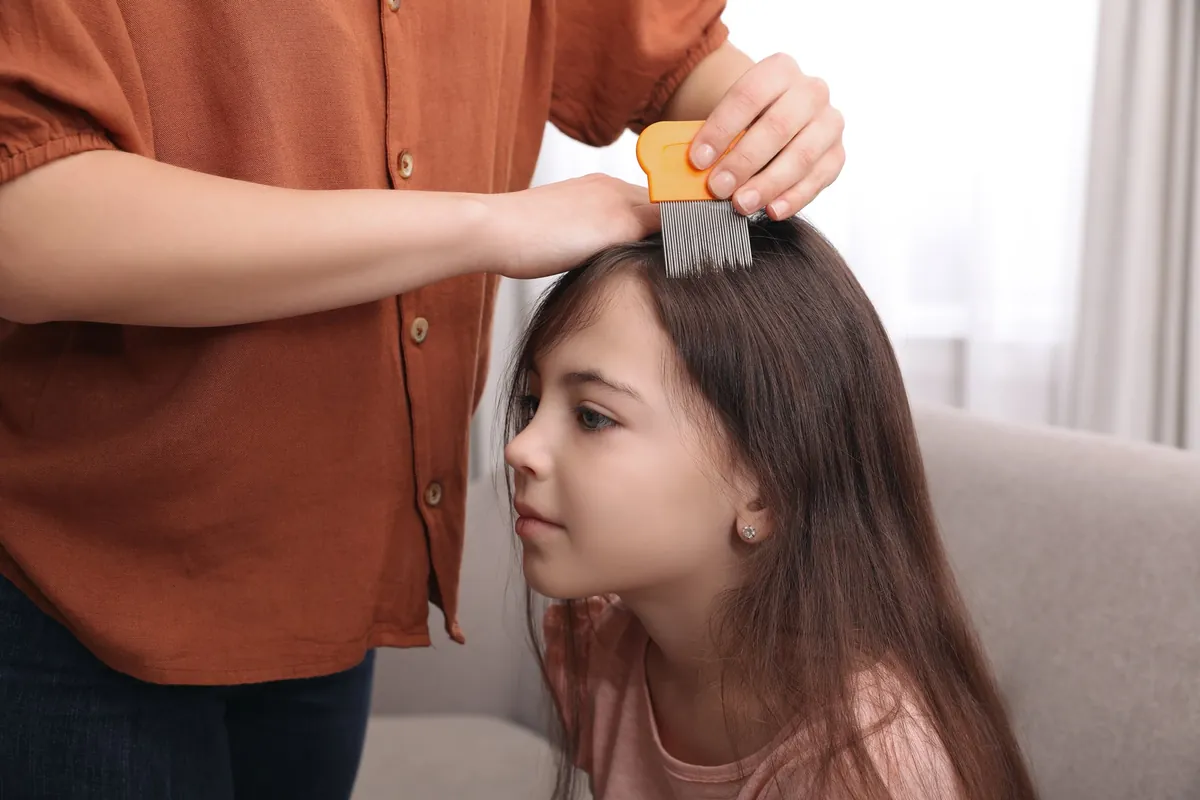
The same evening routine, a fine comb and a great deal of patience, is what clears head lice from a household. The parasites are unrelated; the method is nearly identical.
FAQ
Does my indoor cat need flea treatment?
Indoor cats get fleas. They arrive on trouser legs, on a dog, through an open window, from a visitor’s bag. Being indoors lowers the risk, it does not remove it.
Can I use my dog’s flea treatment on my cat if I use less of it?
No. This is not a dose question. The ingredient itself is the problem, and a smaller amount of a substance a cat cannot process is still a substance a cat cannot process.
Is vinegar or lemon water a real flea repellent?
Both come up constantly in the French tradition. Neither has evidence behind it, and lemon in particular is not something to spray on a cat that will lick it off. If you want a repellent effect, the comb and a clean home do far more.

Virginie Verglas
Virginie is a French journalist and author. She founded Grands-Mères.net in 2012, and her book "The French Book of Natural Remedies" is the American edition of her work on traditional remedies.