IBS home remedies: peppermint capsules, psyllium and fennel
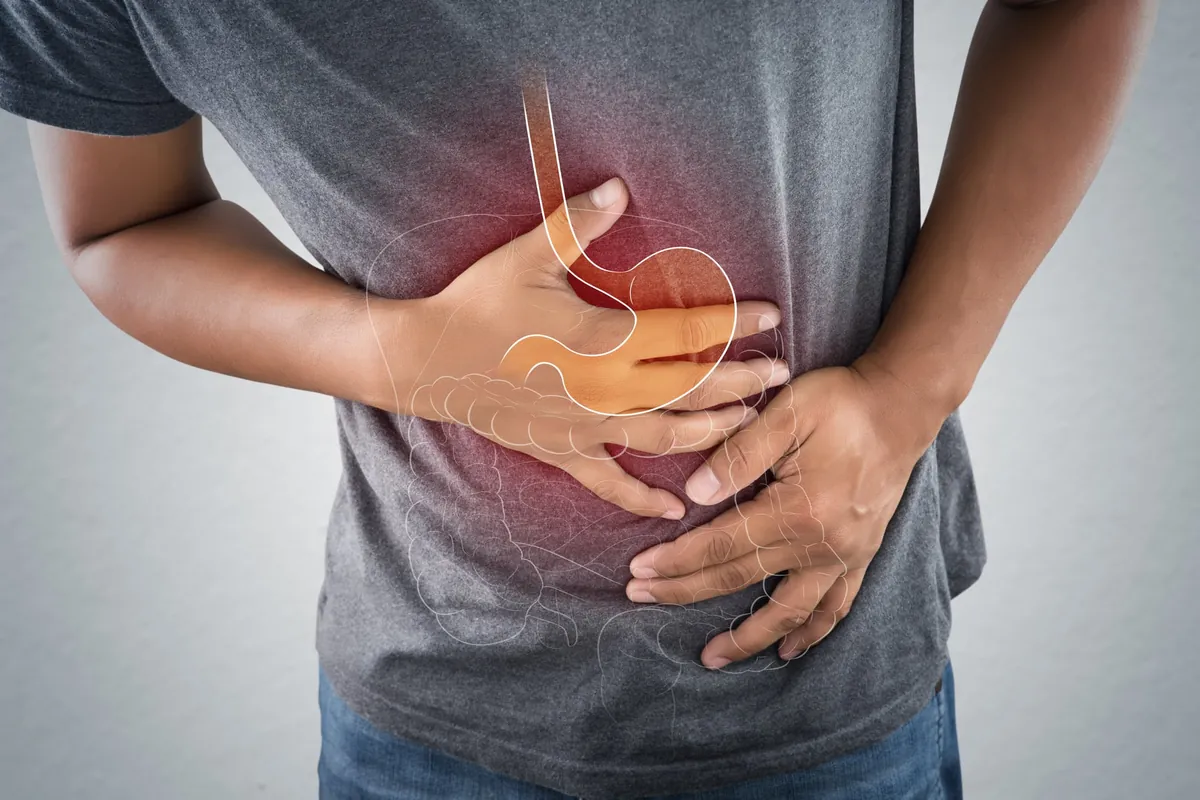
Bloating, cramping, and bowel habits that swing between constipation and the opposite. Irritable bowel syndrome affects 10 to 15% of people, and the thing worth saying first is what MedlinePlus says: it “does not harm the intestines”, even though it can make daily life genuinely difficult.
And the thing worth saying second. “No one knows the exact cause of IBS”, and doctors run tests “to be sure you don’t have other diseases”. That is the step nothing on this page replaces. IBS symptoms overlap with several conditions that are not harmless, and self-diagnosing your way past that is the one real risk here.
Once you have that diagnosis, MedlinePlus is encouraging: “most people diagnosed with IBS can control their symptoms with diet, stress management, probiotics, and medicine.” Here is the French version of that, plus the one remedy with genuine evidence behind it.
Peppermint oil capsules, and this one is different
Almost everything on this site is tradition. This is not.
Take 1 enteric-coated capsule standardized to 0.2 ml, three times a day, 15 to 30 minutes before meals. Swallow it whole with a large glass of water, without chewing. A 4 to 8 week course, depending on how you respond.
What the evidence says, in NCCIH’s own words: “peppermint oil in enteric-coated capsules may improve IBS symptoms in adults”, with a 2022 review finding it “better than placebo at improving overall IBS symptoms and reducing abdominal pain.”
Why the coating matters and is not a marketing detail. NCCIH: “capsules containing peppermint oil are often enteric-coated to reduce the likelihood of heartburn.” The coating carries the oil past the stomach to the intestine, where you want it. Chew it, or take plain peppermint oil, and you get the heartburn instead of the benefit.
Possible side effects, from the same page: heartburn, nausea, abdominal pain, dry mouth, and rarely an allergic reaction.
Who should not take these: anyone with acid reflux, a hiatal hernia or gallstones, children under 12, pregnant or nursing women, and anyone with epilepsy or a history of seizures.
If reflux is part of your picture, our heartburn and indigestion page is where to start instead, and peppermint is not on it either.
Psyllium
Blond psyllium husk is soluble fiber that forms a gel, and in IBS it does something unusual: it helps both directions, firming up what is loose and softening what is hard.
Start with 1 level teaspoon (3 g) in a large glass of water (1 cup / 250 ml). Stir and drink immediately, before the gel forms. Follow with a second full glass. Build gradually to 1 tablespoon (10 g) a day if it suits you.
Never take psyllium without drinking enough water. Fiber that gels without fluid can cause a blockage rather than relieve anything. This is the one instruction on this page we would not soften.
Space it 2 hours from your medicines, it reduces their absorption. Not with a known intestinal narrowing or obstruction.
The same fiber, at the same water rule, is one of our constipation remedies, where it is aimed at one direction rather than both.
The fennel and chamomile infusion
Crush 1 teaspoon of fennel seeds just before brewing, pressing with the back of a spoon, four or five presses. Pour 1¼ cups (300 ml) of water at about 176°F (80°C) over the crushed seeds and 1 teaspoon of dried German chamomile flowers. Cover, steep 10 minutes, strain. One lukewarm cup 20 minutes after each main meal.
A 3-week course, then a week off before starting again.
Who this is not for: pregnancy and breastfeeding, anyone with a history of hormone-dependent cancer, and children under 12. Fennel contains phytoestrogens, and that is the reason for all three.
Add an Asteraceae allergy to the list because of the chamomile: ragweed, chrysanthemum, marigold, arnica and dandelion are the same family.
NCCIH has no fennel page. The chamomile page carries anaphylaxis, that cross-allergy, an interaction with warfarin, and little known about pregnancy and breastfeeding.
Lemon balm
Pour 1 cup (250 ml) of just-simmering water over 1 teaspoon of dried lemon balm leaves. Cover, steep 10 minutes, strain. Two or three cups a day, between meals or during a flare. A 3 to 4 week course, repeatable after a break.
Not with hypothyroidism.
Lemon balm is the plant the French tradition reaches for when a gut complaint is bound up with nerves, which in IBS is most of the time. NCCIH has no lemon balm page, so this is tradition, handed on as tradition, and its calming reputation is not the same thing as evidence.
Targeted probiotics
One capsule of 10 billion CFU in the morning on an empty stomach, with a glass of lukewarm water, daily for at least 8 weeks. Look for Bifidobacterium bifidum, Lactobacillus rhamnosus GG or Lactobacillus plantarum, choose a coated capsule so they survive the stomach, and refrigerate if the maker says to.
This one has MedlinePlus’s backing in principle: probiotics appear in its own short list of what most people use to control IBS symptoms, alongside diet, stress management and medicine.
Eight weeks is a long trial. Two weeks tells you nothing.
The morning routine, and the breathing
The unglamorous half, and in IBS it may be the more important one.
On waking, drink a large glass (1 cup / 250 ml) of lukewarm water on an empty stomach and wait 30 minutes before breakfast. This wakes the gastrocolic reflex and helps regulate transit. Half a lemon in it if you like, except if you have reflux, and rinse your mouth with plain water afterwards to protect the enamel.
Before each meal, sit down, put a hand on your belly, and breathe for 5 minutes: in for 5 seconds letting the belly rise, hold 5, out for 5 drawing it in.
Why this is not filler. The gut is unusually responsive to stress, and IBS is defined by that hypersensitivity. Five minutes of slow breathing before eating is the cheapest intervention available and one of the few that addresses the actual mechanism rather than the symptom.
The belly massage
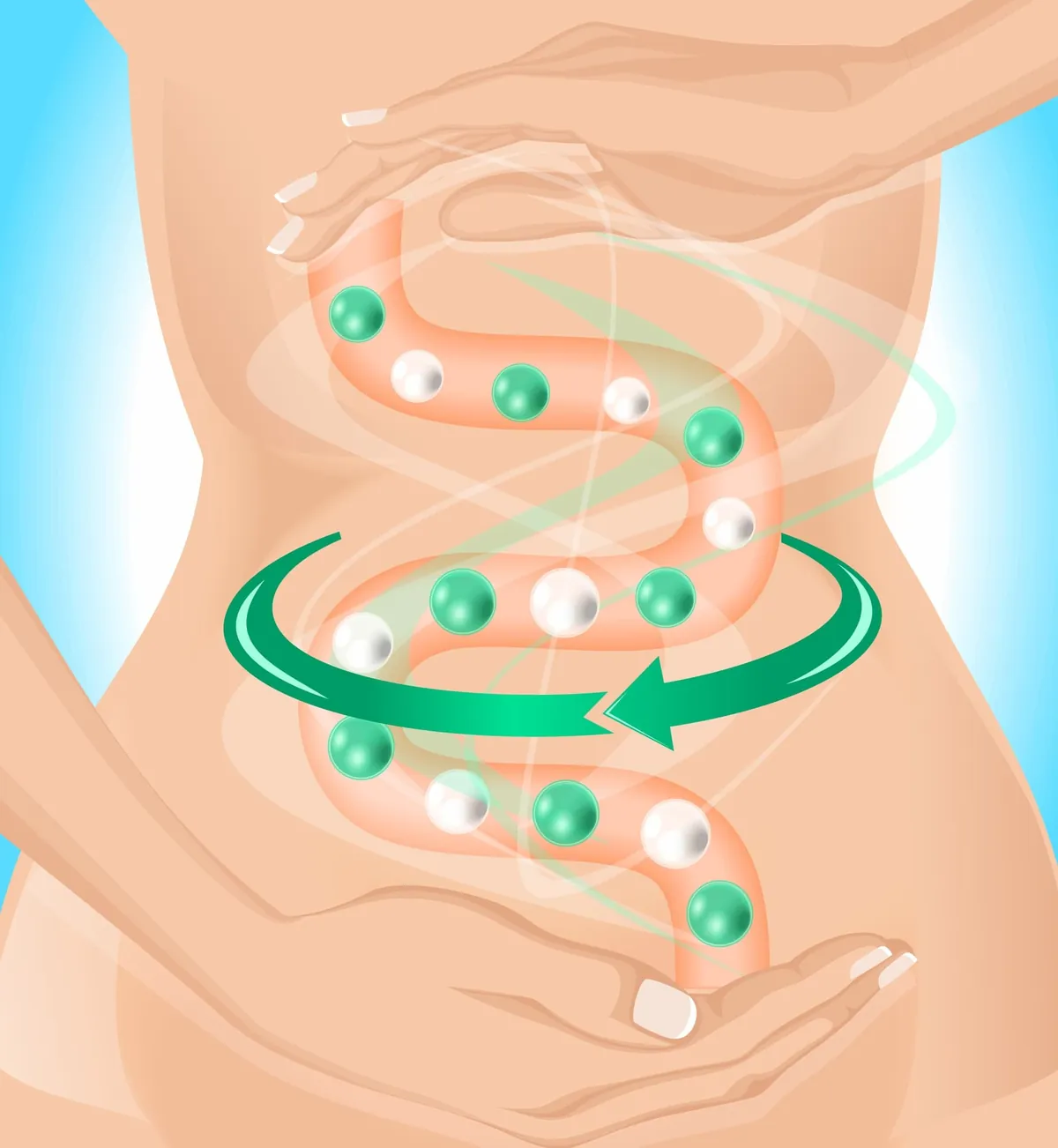
Lying down with knees bent, warm a teaspoon of sweet almond or macadamia oil in your hands and massage the belly in clockwise circles with the palm, starting around the navel and gradually widening. Five to ten minutes, morning and evening.
Clockwise follows the colon. Anticlockwise works against it.
When to see a doctor
Before anything else: get the diagnosis. Everything above assumes a doctor has already told you this is IBS. If nobody has, that appointment is the first item on the list, because the tests exist precisely to rule out what IBS is not.
Go back to your doctor if:
- there is blood in the stool, or black stools;
- you are losing weight without trying;
- the symptoms wake you at night, which is unusual for IBS;
- there is a fever, or persistent vomiting;
- the pattern changes from what you have grown used to;
- symptoms start after the age of 50 for the first time;
- there is anemia, or a family history of bowel disease or bowel cancer.
None of those is typical IBS, and each of them is a reason to be looked at again rather than to adjust an infusion.
If this started after a bad stomach bug, that is a recognized pattern rather than a coincidence, and our stomach flu page covers the recovery phase that sometimes precedes it.
FAQ
Peppermint tea or peppermint capsules?
Capsules, and it is not a close call. The evidence NCCIH cites is specifically for enteric-coated capsules, which carry the oil past the stomach. Peppermint tea is pleasant and it relaxes the valve at the top of the stomach, which is why it causes heartburn in some people and why our nausea page warns reflux sufferers off it.
How long before I know if any of this is working?
Give the capsules 4 weeks and the probiotics 8. IBS fluctuates on its own, which is exactly why short trials mislead in both directions. Keeping a simple note of symptoms, food and stress for a month is more useful than switching remedy every fortnight.
Is IBS dangerous?
No. MedlinePlus says plainly that it does not harm the intestines. What it does do is affect quality of life considerably, which is a different thing and deserves treating seriously rather than being brushed off.

Virginie Verglas
Virginie is a French journalist and author. She founded Grands-Mères.net in 2012, and her book "The French Book of Natural Remedies" is the American edition of her work on traditional remedies.